
Stories from the Youth for climate resilient agriculture (YCRA) programme 3/8
In 2022, FAO and IAAS, in collaboration with YPARD, launched the Youth for Green and Climate-Resilient Agriculture (YCRA) Programme to support youth in their efforts to adapt to and mitigate the impacts of climate change in agriculture and the food system. Through a competitive application process, 8 youth-led projects working for greener and more resilient agrifood systems were selected. Throughout the year, the teams received capacity-building and mentoring to help them take their projects to the next level.
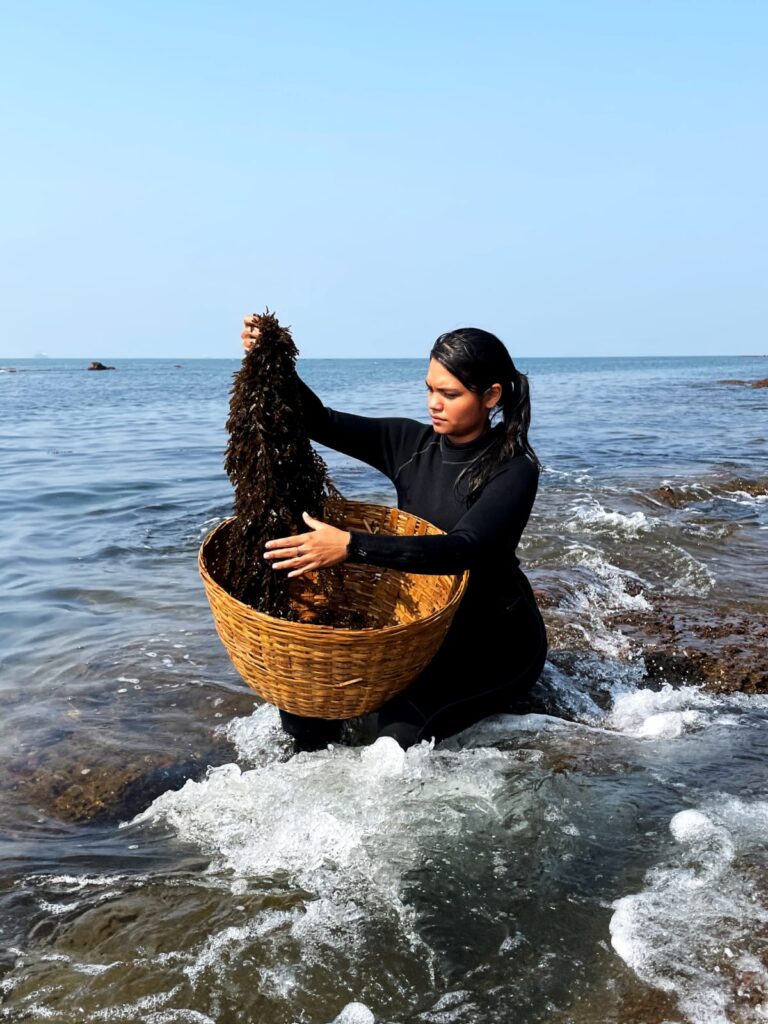
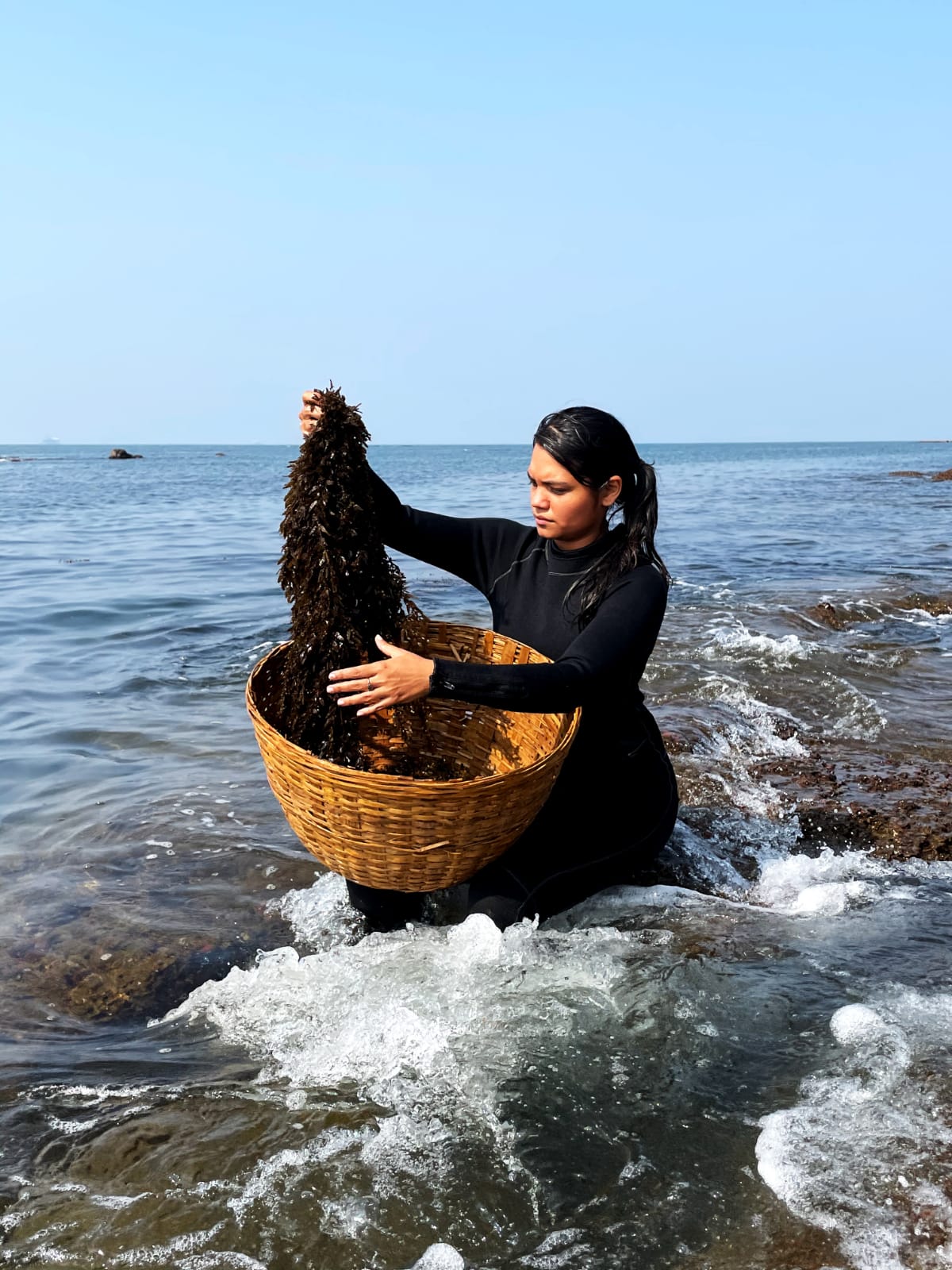
As the programme comes to an end, this series of articles will reflect on the progress and achievements of the 8 youth-led projects. This third article brings us to India to meet Gabriella D’Cruz a marine conservationist who currently runs a consultancy called The Green Ocean and is also the brain behind the Native Seaweed Farms India.
Harnessing the benefits of native seaweeds on the west coast of India
India’s seaweed market is growing rapidly. The product has received a lot of national attention and efforts are increasingly invested in the production of seaweed bioplastics, biofuels, and bio-fertilizers. These developments have put pressure on wild seaweed forests, which are expected to be more and more overharvested. The current seaweed industries in India are encouraging a non-native and invasive species (Kappaphlycus alvarezii), which is known to impact the growth of coral reefs negatively.
With the aim to build a more sustainable seaweed market, Gabriella D’Cruz, a young marine conservationist, created Native Seaweed Farms India. The 3-year project (October 2021 to April 2024) operates in Goa and seeks to design native seaweed farms from Graicilaria and Sargassum species with high market value and which do not damage coral reefs.
In addition to the pilot farms, Native Seaweed Farms India has expanded its activities and transitioned into a food company called The Good Ocean. This consultancy monitors local seaweed forests near Goa and harvests a controlled amount of local seaweeds for sale to chefs and restaurants across the country. The ultimate aim is to advocate for the integration of seaweeds as a low-carbon source of protein into Indian diets and promote a sustainable value chain.
From production to supply chain management: acting at all stages of the value chain
In January, Native Seaweed Farms India was selected to participate in the YCRA programme. The capacity building has supported the project with its transition from a production company to a consultancy tackling all stages of the value chain.
“It was through the YCRA program that I was able to recognize the gaps in the project and started looking more into the market side of the seaweed supply chain rather than the production side”, says Gabriella enthusiastically. “This transition has enabled me to successfully build a processing unit, hire a team and connect to markets where I now sell seaweed to restaurants in two states in India.”
This year, the team has worked hard on designing packaging and building a marketing strategy, as well as developing a financial plan. The YCRA also connected Gabriella with Philippe Bujold and Cortney Price, experts in behavioural sciences, to help identify strategies to promote seaweed consumption across India.
Since this summer and through the YCRA’s mentoring programme, Gabriella and her team also benefited from the expertise and support of Dr. Junning Cai, aquaculture officer at FAO. “I am incredibly grateful to Dr. Cai, who has been very active in helping with this project development”, thanked Gabriella.
Dr. Cai helped the project team build new partnerships and set up guidelines for seaweed harvesting and processing. Gabriella and her team have now met with seaweed production specialists, as well as food scientists that have helped refining the seaweed processing techniques.
Growing seaweeds: obstacles and outlook
Gabriella’s native seaweed model has received increasing interest to be scaled up across the west coast of India. “We have already received many inquiries from communities and individuals wanting to start seaweed farms”, explained Gabriella. “Our native seaweed model will be in huge demand considering the increase in market demand for seaweed”.
To keep on their fast growth, the small business is looking into financial opportunities: the team is looking to collaborate with local research organization to help co-develop the farm model, and is also trying to find more affordable testing facilities. Indeed, at the moment, quality testing of the food-grade seaweed products induces significant costs for the small business.
Building a small business requires efforts, but Gabriella is hopeful for the future. The native seaweed market is new and quickly changing, but one thing is certain: it is there to stay.
For more information:
- Visit the webpage of the project: https://www.eco-nich.org/seaweed
- Listen to Gabriella’s BBC Podcast: https://www.bbc.co.uk/programmes/w3ct1rgm
- Watch the webinar “Using behavioural science for youth climate action in agriculture”: https://www.youtube.com/watch?v=l35TGqA6ovo&list=PLzp5NgJ2-dK4O5P-8fb0mXt90SAlRQJnE&index=2
- Visit the YCRA Programme’s page: https://www.fao.org/climate-change/programmes-and-projects/detail/en/c/1504698/