
Stories from the Youth for climate resilient agriculture (YCRA) programme written by Kulayman Conteh 1/8
In 2022, FAO and IAAS, in collaboration with YPARD, launched the Youth for Green and Climate-Resilient Agriculture (YCRA) Programme to support youth in their efforts to adapt to and mitigate the impacts of climate change in agriculture and the food system. Through a competitive application process, 8 youth-led projects working for greener and more resilient agrifood systems were selected. Throughout the year, the teams received capacity-building and mentoring to help them take their projects to the next level. As the programme comes to an end, this series of articles will reflect on the progress and achievements of the 8 youth-led projects. In this first article, we travel to Zambia to discover Project Pamodzi and discuss with Chiyanika Nakasamu, one of its co-founders.
PROJECT PAMODZI: EMPOWERING SMALL-SCALE BEEKEEPERS IN ZAMBIA
Pamodzi is a 2-year project which aims to improve the livelihoods of small-scale beekeepers in Zambia. It is implemented by a group of 6 local innovators under Fourth Line Limited, a youth-led social enterprise dedicated to reducing poverty and eliminating the economic reliance on environmentally harmful practices in rural communities.
In Zambia, rural poverty is persistently high, with as much as 76 percent of the rural population considered poor in 2015. Poverty and social exclusion have a direct impact on the environment given that vulnerable populations are less able to invest effectively in sustainable productive activities. For instance, Zambian rural communities often rely on tree logging and charcoal production and beekeepers largely practice traditional beekeeping by making hives using tree barks. This practice poses a threat to the forests as the debarked trees eventually dry up, and contributes to a larger issue of high deforestation rates in Zambia.
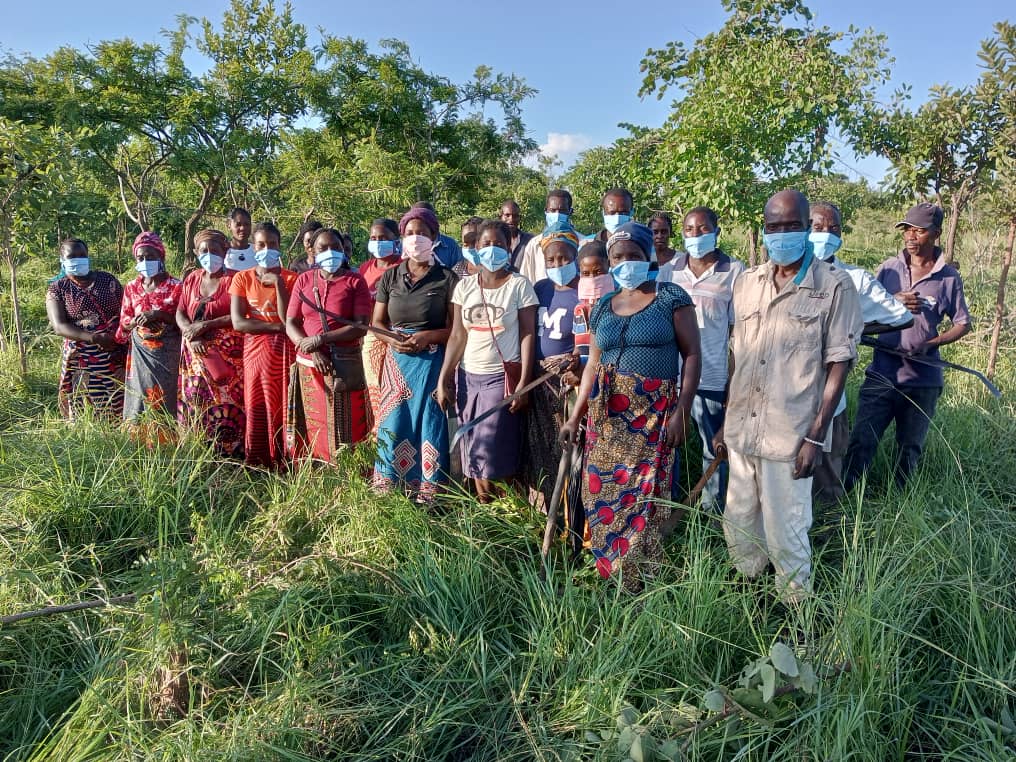
Project Pamodzi works with farmers in rural communities to develop a sustainable and scalable production of organic honey, beeswax, bee venom and value-added products for local and global markets. To achieve this, the project trains farmers on sustainable beekeeping practices, and supplies them with innovative beehives made of unwanted wood waste and developed by the project. It also buys honey from farmers to package, label and sell it on the international market. From 2021 to 2023, Project Pamodzi aims at training 2500 farmers and distributing 1300 beehives.

LOOKING BACK ON PROGRESS
Since 2021, Project Pamodzi has trained 650 farmers on modern and sustainable methods of beekeeping. Those who have undergone the training were all provided with modern beehives. The support from the YCRA programme has helped the team identify new opportunities and improve cooperation. The trainings received also built the team’s capacity to develop business plans and improve their branding. “The YCRA has opened doors for other opportunities such as networking, learning new skills and ideas in business. The capacity building training has broadened our understanding on business management and branding”, said Chiyanika a co-founder of the Fourth Line Limited.
The Project Pamodzi team was also supported by two mentors: Svetlana Rajic (MBa) and Chama Theodore Ketuama (Ing). They helped with creating a 3-year action plan, strengthening partnerships with the beekeepers, and identifying funding opportunities. “The mentors helped a lot”, reflected Chiyanika. “They linked us to networking opportunities and international markets. It was also through their ideas that we came up with an action plan, and this paid off diffident”.
The YCRA also aimed at providing Project Pamodzi with visibility. In July, Chiyanika presented Fourth Line Limited’s efforts to create decent work opportunities during the YCRA webinar series “Sprouting change: capacity-building for youth in green and climate-resilient agriculture”. Later, in November, he was selected as climate champion to attend COP27 and meet there with like-minded entrepreneurs.
Finally, right after COP27, Chiyanika’s work also received recognition from Prototypes for Humanity (ex. Global Grad Show), with Fourth Line Limited’s financial services for smallholder farmers being featured in the 2022 edition.

INTENSIFYING SUPPORT TO FARMERS
For the future, Chiyanika and his team will keep up the efforts to find adequate partnerships that will allow them to reach more farmers. Currently, over 4000 beekeepers are on a waiting list to receive their support, but not all can be accommodated due to lack of funding. A digital platform has also been created to support collaboration and networking amongst farmers and reach out to potential donors.
The team is also working hard to identify stakeholders who could give financial support (grants, loans, etc.) to farmers for them to invest in their businesses and in a transformation of their practices. Indeed, in their efforts to disseminate knowledge on sustainable honey production, Project Pamodzi has witnessed that lack of savings remained the main barrier to a change of practices.
To know more: