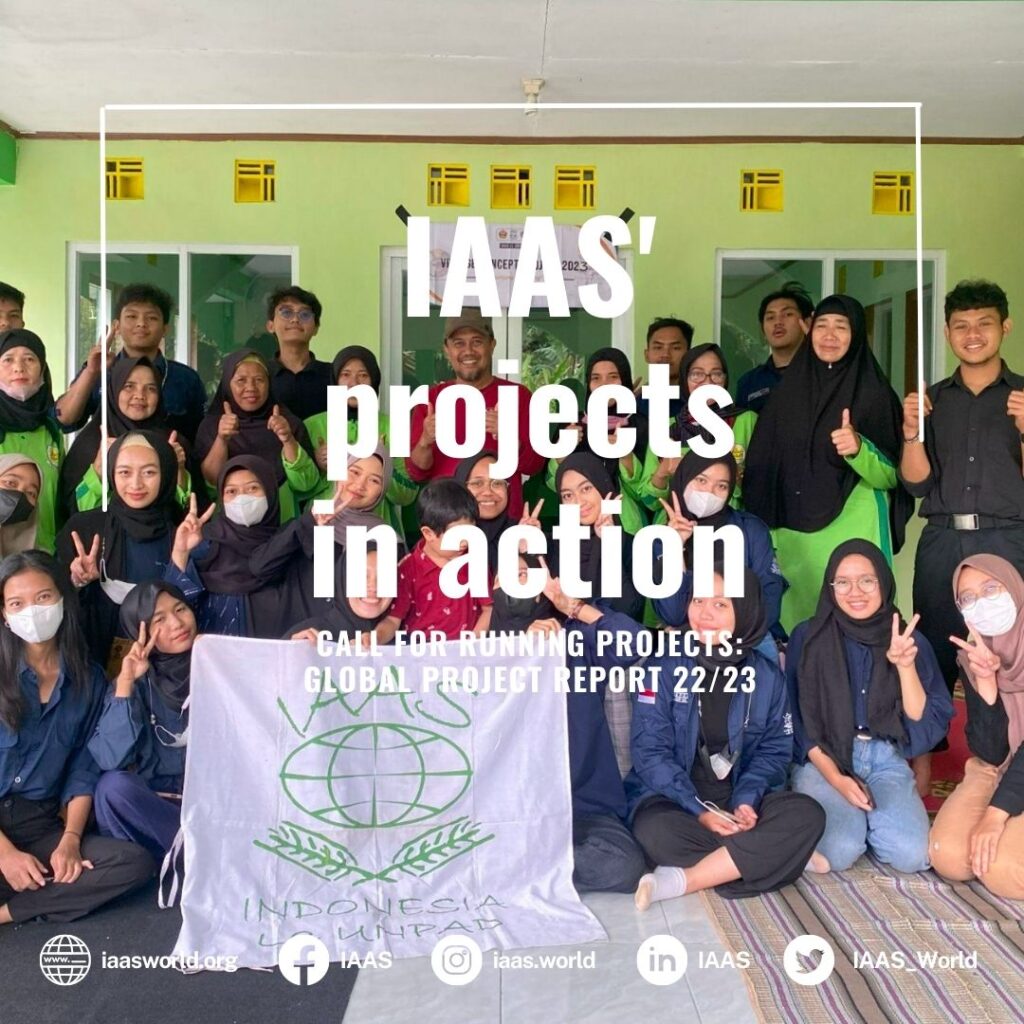

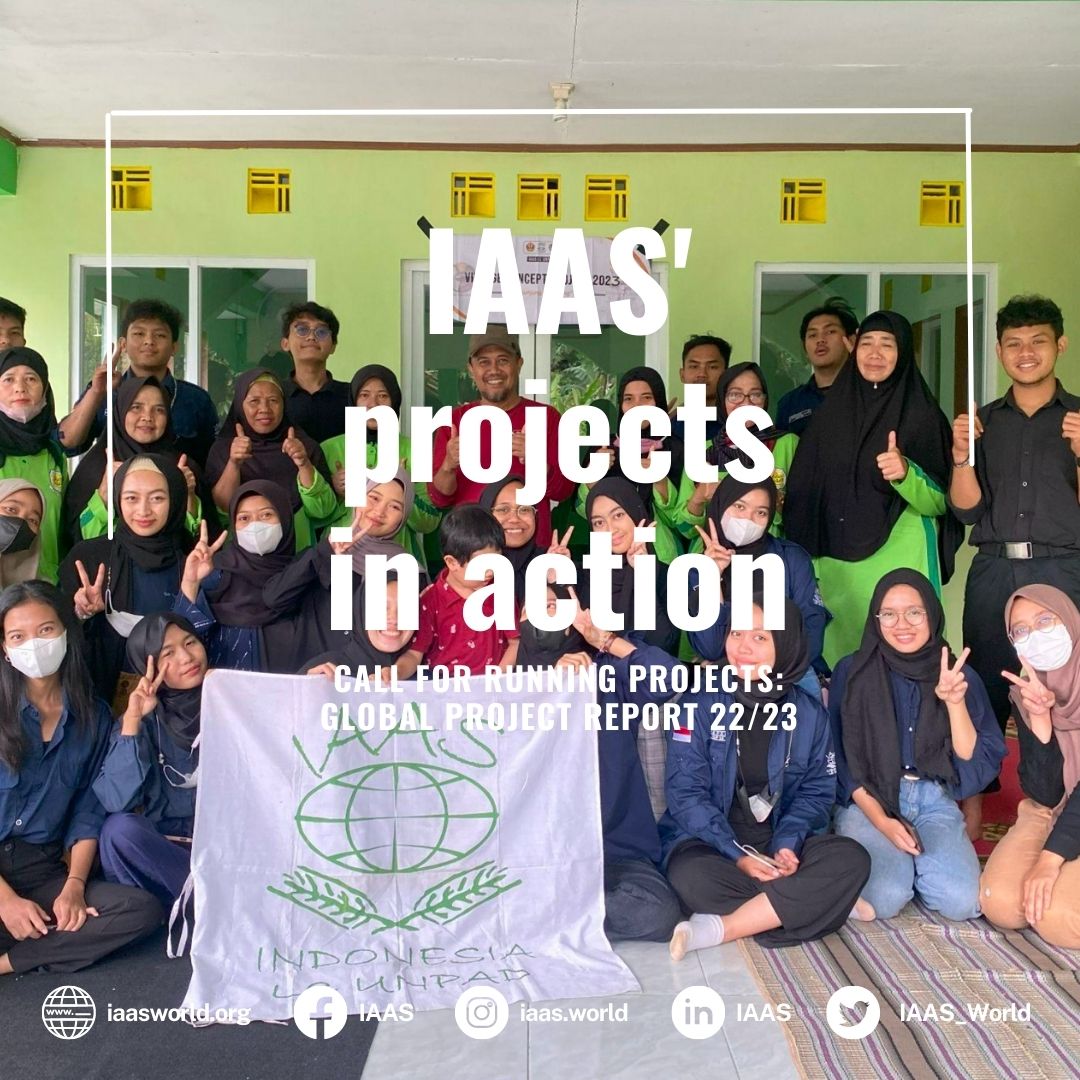
IAAS hosted a call for running projects where IAAS committees worldwide were invited to submit an update on their ongoing updates. Sixteen projects were submitted, which means the IAAS Global Project Database now counts 40 projects by students from all regions of the globe. Three of the sixteen newly entered projects receive a small grant to further their work.
A five-headed jury was formed with one representative from each region, which critically read all project applications. After consultation and reflection, they have picked three winners for the small grants: the first prize of €450, the second prize of €300 and the third prize of €150. The winners are from Indonesia, Nepal and Ghana.
First-prize winner: VCP Ngajungjung Cinanjung from IAAS Indonesia
The Village Concept Project in Ngajungjung Cinanjung, Indonesia, involves IAAS Indonesia LC Universitas Padjadjaran and the Malati Asih farmers’ group. They aim to develop Aesthetea, a healthy beverage made from roselle plants, using permaculture methods for sustainable land cultivation. Despite initial challenges and limited resources, the project succeeded in transforming abandoned land into a thriving Aesthetea production area. It significantly improved the lives of 22 women farmers, empowering them to operate the production process independently. Seeking further support, they aspire to expand marketing capabilities, establish partnerships, and create a self-sustaining model to inspire others in rural communities.
The jury was impressed by the simplicity and effectiveness of this project, which introduces a unique and exotic product that is easy to grow and process. The idea’s feasibility and already proven success make it stand out as an excellent on-field example of how a VCP can drive change. The project’s innovative approach and practicality have received admiration from the jury, showcasing its potential to inspire and pave the way for similar impactful initiatives.

Second-prize winner: Trichovermi from IAAS Nepal
Trichovermi is an ongoing project in Dharan City, Nepal, led by IAAS Nepal and IAAS Nepal LC ERC, aiming to promote organic food production through the use of Trichoderma and vermicompost. Trichovermi is a powerful blend that enhances soil health and crop yield, with Trichoderma providing biocontrol against plant pathogens.
Trichovermi has potential benefits for agriculture, food and waste management, and women in agriculture. The project has provided training on vermicompost use in Gothgaun, Morang, and received recognition for the “Golden Growers” project. With continued support, Trichovermi aims to empower individuals to manage organic food production and enhance sustainability in their own backyards or terraces.
The jury review for this project is highly positive, commending its well-thought-out and interesting idea. The project’s impact on promoting sustainable practices and contributing to the SDGs has impressed the jury, making it a standout and promising initiative.

Third-prize winner: SteFarms ( Organic Urban Farming) from IAAS Ghana
SteFarms, an Organic Urban Farming initiative based in Haatso, Ghana, spearheaded by IAAS-UG Ghana and Mensah Isaac Kweku Junior, is transforming agricultural waste into meaningful resources. They recycle solid organic waste like sawdust into organic mushrooms through composting and use it to produce soilless media for vegetable farming.
By implementing clean water and chemical-free practices, they aim to ensure the production of healthy vegetables and promote sustainable urban farming.
While facing financial constraints for expanding services and limited land for vegetable production, SteFarms strives to provide practical skills to IAAS members, individuals, and farmers through their partnership program with the Crop Science Department. So far, they have successfully trained 5 IAAS members in efficient vegetable production using botanicals and plan to train 20 each in mushroom production, soilless media production, and vegetable production.
SteFarms impresses the jury with its effective small-scale operations and a strong focus on sustainability through waste utilization. While the soilless farming concept is not entirely new, its application in an urban setting remains intriguing. SteFarms’s innovative approach and dedication to sustainable practices make it a promising initiative.

Global Project Report 22/23
These three projects are put in the spotlight, but many more exciting projects were submitted. To tell the stories of all IAAS projects, a Global Project Report 22/23 is in development, which will set out the stories of the 40 active projects in the academic year of 22/23. Interested in reaching out to the project coordinators? Have already a look at the Global Project Database by contacting president@iaasworld.org.